Jack Russell Terrier Agility
Agility is a trial event in which dogs traverse a maze of obstacles and compete for speed and accuracy. It has an overwhelming spectator appeal, largely because of the fast pace, the challenging and visually appealing obstacles and the contagious enthusiasm displayed by the dogs.
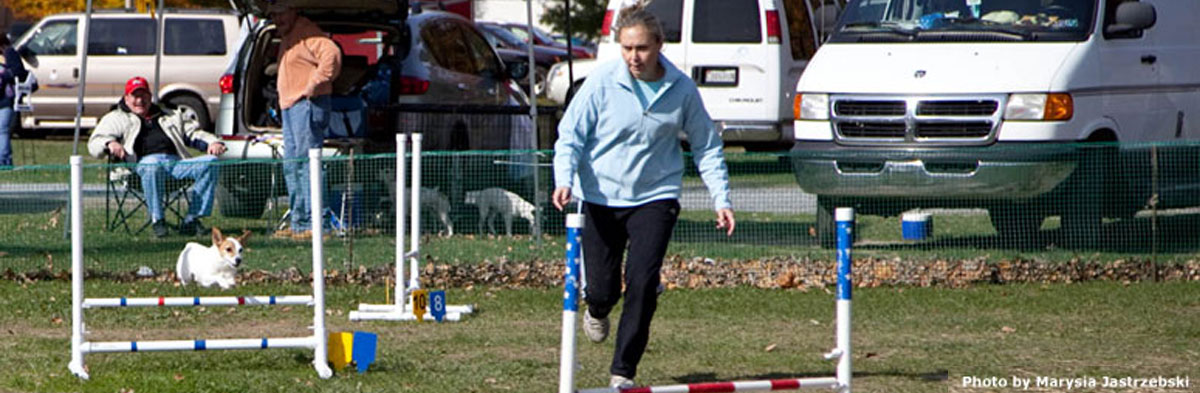
A Maze of Obstacles
Agility is a trial event in which dogs traverse a maze of obstacles and compete for speed and accuracy. Terriers jump through tires, zip through tunnels, scale a 5'7" A-Frame, traverse a narrow "dog walk", negotiate a see-saw, zigzag through closely spaced, upright poles and soar over a variety of challenging hurdles. The sport has an overwhelming spectator appeal, largely because of the fast pace, the challenging and visually appealing obstacles and the contagious enthusiasm displayed by the dogs.
On-lead agility is unique to the Jack Russell world. It is intended and offered as an introduction to this sport. It is offered in recognition of the fact that many JR owners do not have the opportunity to work on agility equipment, other than at a terrier trial.
 On-lead is offered at two levels, novice and advanced. Novice is truly for the first time JR competitor, canine or human. It is limited to dogs which have never received a score of 190 or better in an agility competition (JRTCA or otherwise).
Control is a necessity in agility. A leash is allowed at this level only to prevent terriers from running off. It is not intended to be used by an exhibitor to force a dog to complete the obstacles. Hence, penalties are assessed in scoring agility for tight leads and leash pulls. Teach your dog to sit, down, come, stay and wait at home to that you won't need to tug him into place.
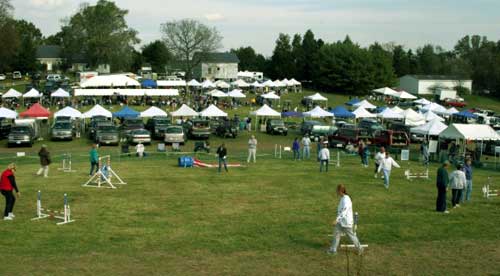
Agility Rules
For the most up-to-date rules on Agility, please refer to the JRTCA Sanctioned Trial Rule Book.
Agility Training and Safety Tips
- Use a flat buckle collar (or no collar at all) when training agility. Do not use a "choke" or "slip" collar.
- Do not force your terrier to complete an obstacle
- Don't push a young dog; remember, only dogs over one year of age may complete for both safety and health reasons
- Keep training sessions short
- Combine training with play. Play is a great reward.
- Always end your sessions on a successful note
- Choose a command for each obstacle and consistently use it in your training